
Back to Articles
Logistics Automation2024-03-278 min read
Warehouse Asset Tracking: How YT-Helix 310 Supports Autonomous Kiosks
The Challenge: Reducing Asset Loss on the Warehouse Floor
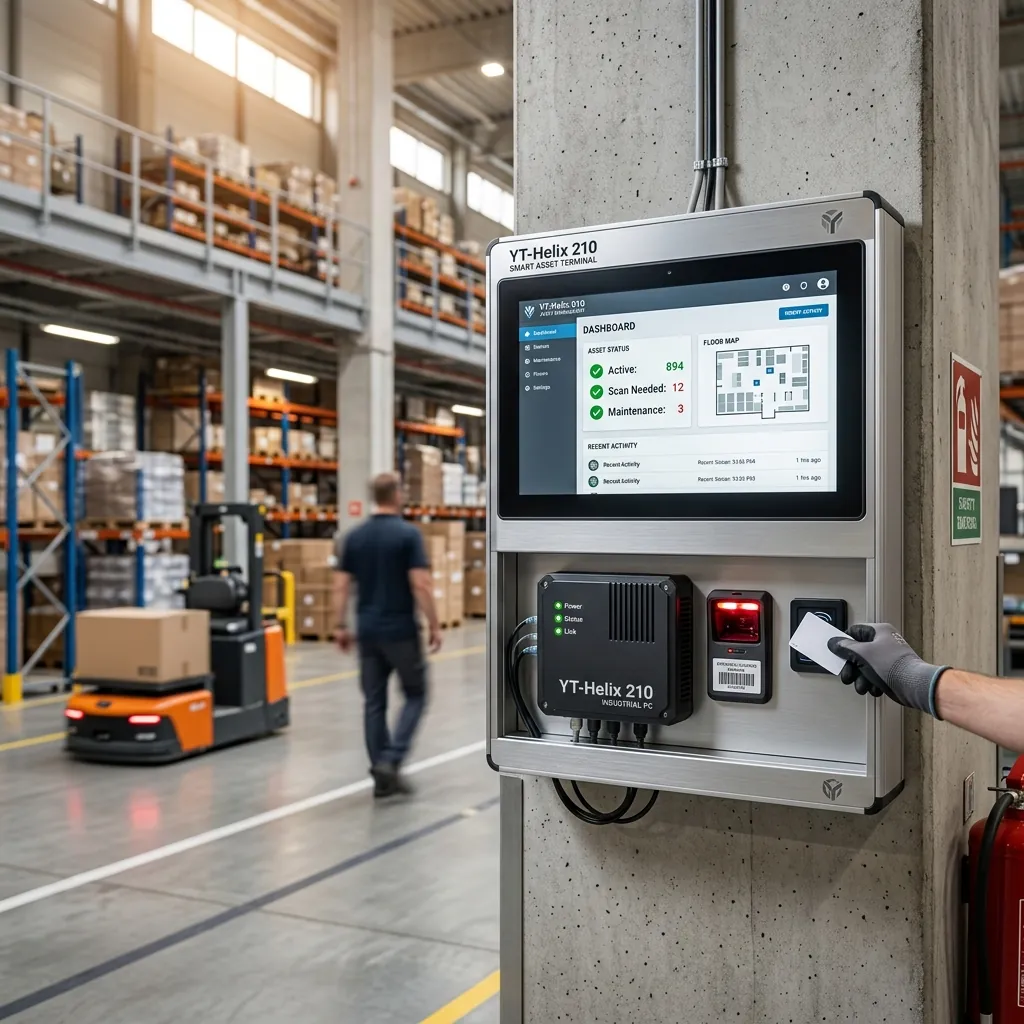
In high-volume logistics centers, handheld scanners and tablets are difficult to track across shifts, loading areas, and charging points. The project required a kiosk platform that could authenticate users, manage device checkout, and keep charging bays connected to the central asset system.
The environment created practical engineering constraints:
- Particulate Ingress: High-velocity sorting lanes create dust levels that shorten the life of fan-cooled office PCs.
- Operational Heat: Non-climate-controlled loading docks can reach elevated summer temperatures during peak shifts.
- Space Constraint: Kiosk enclosures offered limited depth for the computing core.
The Solution: YT-Helix 310 Edge Node
Yantronic engineered a deployment centered around the YT-Helix 310, powered by Intel's industrial Elkhart Lake architecture.
Why YT-Helix 310?
- Fanless Reliability: The solid-aluminum chassis draws heat away from the CPU while keeping dust-sensitive moving parts out of the kiosk.
- Compact Form Factor: The low-profile system fit behind the biometric touch panel of the ARC asset retrieval kiosk.
- Industrial I/O: USB and LAN connectivity supported fingerprint scanners, charging bays, and local network backhaul.
Technical Architecture
The YT-Helix 310 acts as the control node for the ARC kiosk:
- Biometric Integration: Processing fingerprint data for secure employee authentication.
- Smart Charging Control: Monitoring the charge status of connected handhelds through the kiosk control layer.
- System Synchronization: Logging checkout events and user IDs to the central asset management database over a secure network connection.
Deployment Outcomes
The deployment helped the warehouse team move from manual sign-out sheets to controlled device checkout:
- Asset Visibility: Each scanner or tablet was tied to a user, checkout time, and charging bay status.
- Management Efficiency: Floor managers could review device status from the kiosk workflow instead of searching across shifts manually.
- Maintenance Fit: The fanless enclosure reduced exposure to dust and service interruptions inside the kiosk.